Digital cameras have revolutionized
photography in many ways, but to my mind the least
understood one has little to do with what you do with the
resulting image. Instead it has to do with how you look at
the act of taking the photos in the first place.
In essence, you trade the cost of film and processing
(none with digital) for the cost of your time in winnowing
out the bad shots from amongst far more taken at the time,
as well as the cost of storing the images securely and
quickly.
I've used all manner of film cameras, from my old Agfa box
120/620 that I used to take my first travel pictures at
Disneyland when I was a kid, to my father's bellows-equipped
Zeiss Ikonta, to several 35mm cameras from the likes of
Pentax and Canon, 8/16/35mm movie and a range of plate and
half-plate process cameras; even a sheet film process camera
that was the size of a small house. Over the years I've shot
more film than I care to imagine, and paid tens and hundreds
of thousands of dollars for film and processing. In
addition, I've purchased film storage ring binders and
pages, acid-free envelopes, storage containers and such to
store the negatives and slides.
What will it be like looking back 20+ years from now
at the costs associated with using my
Nikon D70 and its
inevitable follow-on digital cameras now that I've made the
switch to mostly digital?
What do the changed economics of digital photography
mean to my photography techniques?
These are questions I'm addressing constantly in this
first year of my use of professional-grade digital
photography.
The first aspect, the one I'm addressing in this
article, is how I'm affected during the act of taking
pictures. What does the fact that my "film" is free do to my
mindset when I'm composing, choosing f-stop, shutter-speed,
light-balance, bracketing, etc.?
I can tell you that looking back over the first year, my
initial thought is "I need more and larger camera
storage". Taking time to change every 100 or so shots
(on the 1Gig) is not as bothersome as changing film every 24
or 36 exposures with my 35mm Canon, but taking time to dump
a card, and even bringing the laptop to do this into, is
very different and time consuming. I had purchased a
1Gig Lexar 80x Professional Compact Flash from my local
camera store when I purchased the Nikon last August. Along
the way I have also added a 1/2Gig card left over from a
project at one of my customers' that is a no-name brand
industrial card. Hmmm... at the time, this was the
equivalent price of about 10 rolls
of 36 exposure professional film, processing and printing.
Today it's about 1/2 that.
So, time spent changing "film" is still a bit of a
pain, but it happens less frequently. The effect is that I
can concentrate on the subject for longer without extra
camera bodies and having an assistant load for me.
Years ago, I put 10 rolls
through my Canon A1 just playing with it when I traded up
from my old AE1. I did the same more
recently when I again took up film (after my video
hiatus with the kids) with a used Pentax K1000. This is a
reasonable minimum to test and get to know a new camera/lens
combination. Each time I did it
over a few days or a week or so - different lighting
conditions, different subjects - some familiar, some new,
etc. Prior to the more sophisticated
cameras such as the AE1 and other "automatic" SLRs, most
photographers would only run maybe a single roll through
just to make sure the camera was working and the shutter
speeds were correct and consistent. We spent more time
evaluating lighting equipment and light meters as well as
calibrating our darkroom equipment and chemicals. The advent
of "programmed" mode such as the Canon pioneered meant
getting to know a camera that did many of the things I'd had
to do in the past - meter, choose f-stop and shutter speed,
etc.
Digital cameras in general and my new
Nikon D70 in particular, go even farther with automation.
The Nikon adds auto-focus and various potential in-camera
image enhancement options. All of these settings and options
need to be learned and their impact on the final image
understood. Of course you can always just use the camera in
manual mode and either hand meter or use the built-in spot
system, but hey, you paid for the tricks, you should
probably know how to use them; especially since the can come
in very handy.

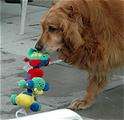 With
the D70, what I did was take over
500 shots over a 3 hour period at a picnic I had been
invited to that afternoon. As you'll note, I concentrated on
details of the people there. Two days later, I took another
500 shots over a period of the day at Fort Langley and
surrounding areas, and I did the same several times over the
next month in other locations - each session exploring some
new aspect of the camera and confirming others that I'd
learned or discovered; automatic, aperture priority, shutter
priority, bracketing, various ISO speeds in various lighting
conditions, hand-held at various speeds, and tripod mounted
at r-e-a-l-l-y s-l-o-w speeds. In essence, I "spent" several
thousand images learning what my
new
camera could do and even more importantly, what it couldn't
do.
With
the D70, what I did was take over
500 shots over a 3 hour period at a picnic I had been
invited to that afternoon. As you'll note, I concentrated on
details of the people there. Two days later, I took another
500 shots over a period of the day at Fort Langley and
surrounding areas, and I did the same several times over the
next month in other locations - each session exploring some
new aspect of the camera and confirming others that I'd
learned or discovered; automatic, aperture priority, shutter
priority, bracketing, various ISO speeds in various lighting
conditions, hand-held at various speeds, and tripod mounted
at r-e-a-l-l-y s-l-o-w speeds. In essence, I "spent" several
thousand images learning what my
new
camera could do and even more importantly, what it couldn't
do.
So
getting to know your equipment is no longer a really
expensive proposition. There is no excuse for you not to
know virtually every aspect of its capabilities and
limitations
 "OK," you say, "that's fine when you're learning, but
what about when you're shooting to get "the best" image of a
particular situation?"
"OK," you say, "that's fine when you're learning, but
what about when you're shooting to get "the best" image of a
particular situation?"
Well, in the past, depending upon the subject and my
intended use of the shots, I might have expended a couple of
rolls on a single subject and as many as 10 or more on a
session with many subjects (weddings, etc.) The limiting
factor was how much I felt the investment was worth, or how
much the customer felt was reasonable for such a shoot.
Today I'll shoot as many as hundreds for a single subject
and a thousand or more in situations where subjects and
opportunities change by the second. My limit is whether I
have a data dump for my flash cards, hence my wish to
purchase more and bigger ones.
I shoot on the Nikon with image
quality setting "Raw/basic" so I get both a raw and a
jpg. I use the low-res JPEG to cull, looking for exposure,
focus, composition, and lack of unwanted camera motion or
subject motion; then it typically gets tossed.
This leads to the next aspect of the difference between
the use by most users of film or digital: shoot lots,
but... THROW OUT LOTS! and do it quickly!